
Identify a Sumner County Property Owner
Ownership evidence in Sumner County lives in three offices. The Appraiser keeps the roll, the Treasurer handles the tax bill, and the Register of Deeds holds the deed records. A roll name is only a working answer, since the Register publishes no online index and the recorded grantee with the legal description may require an office request.
- Normalize the address, then use the Sumner County Parcel Search.
- Save the tax ID and legal description. Treat the owner name as a dated roll snapshot.
- Ask the Register of Deeds for the newest full-interest deed matching the tract.
- Read the grantee, instrument type, legal description, reservations, and recording reference before identifying the property owner.
Sumner County Owner Record Sources
No single Sumner County record answers every ownership question. Compare the same parcel across the roll, tax bill, and deed, because each was created on its own date for its own purpose.
| Source | Owner Info It Gives | Access |
|---|---|---|
| Appraiser roll | Possible roll-owner entry and parcel context | PublicAccessNow; exact result labels not captured |
| Recorded deed | Grantee, instrument and legal description | Register counter or mail request |
| Tax search | Name/company, tax ID, address and year search | PublicAccessNow tax portal |
| Ownership map | Tax-reference parcel location | Annual county map, available for a fee |
An owner of record is not always an occupant. The mailing address can differ from the situs address. Rural land, trusts, estates, and billing arrangements all explain the gap, so check both fields on the parcel card.
Enter Sumner Owner Search Carefully
The Sumner parcel portal offers both registered and unregistered ways in, and a disclaimer screen comes before any completed parcel card. Do not assume every field is public. The official parcel-search entry displays the starting screen a visitor encounters.
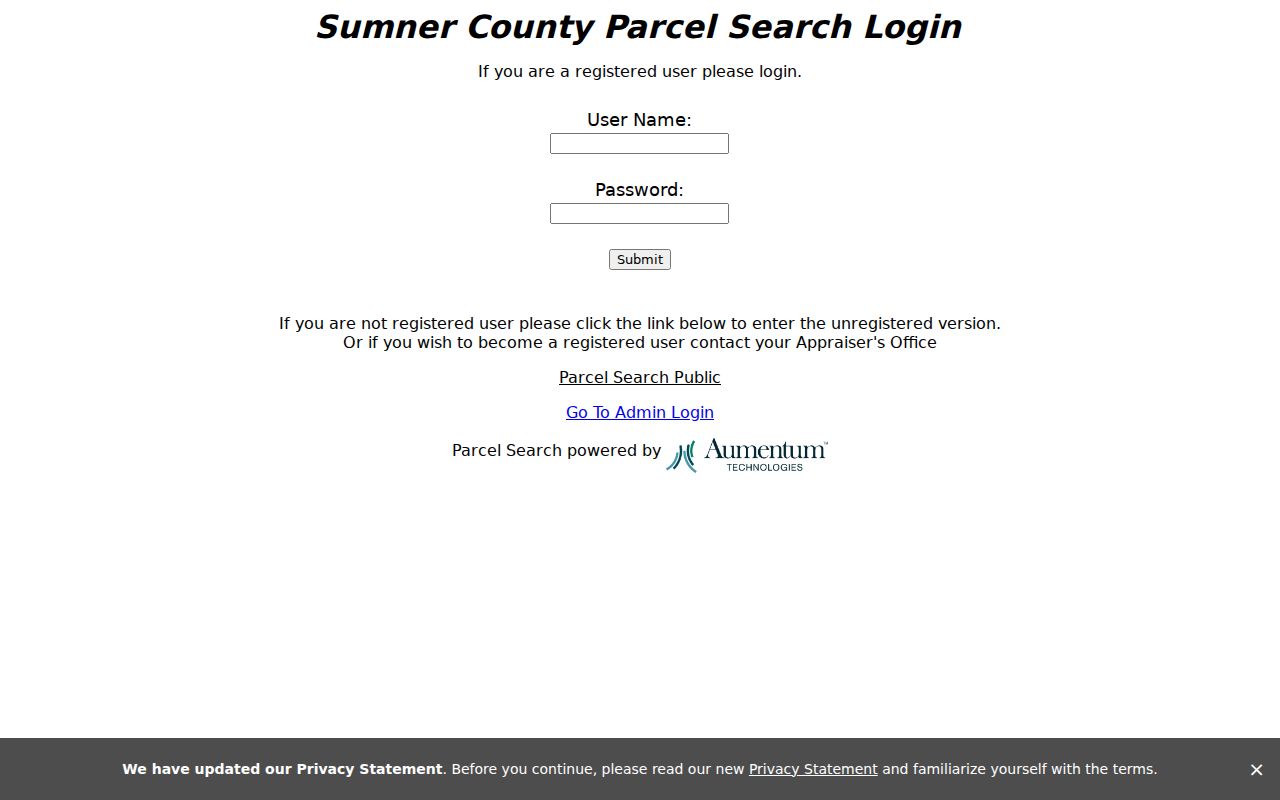
The starting screen confirms only the access routes. Owner labels, mailing-address fields, sales detail, and map tools stay behind them. The separate tax search accepts a last name or company, tax ID, tax year, and address components, so record your search date and the year you selected.
Confirm Sumner's Newest Transfer
A closing can be recorded weeks before the assessment roll catches up. Sumner County promises no fixed deed-to-roll refresh schedule. So contact the Register of Deeds with the roll name, the situs address, a parcel or tax ID, the legal description, likely parties, and the approximate date. Request the newest deed affecting the whole tract.
The Register sits in Room 103 at 501 N. Washington Avenue in Wellington. Walk-in hours run weekdays, 8 a.m. to 5 p.m., and the phone line is 620-326-2041. Mail reaches the office at P.O. Box 469. Its records cover real-estate transactions, mortgages, oil and gas leases, liens, easements, and plats. The county publishes no searchable grantor-grantee portal for them, though.
The County Appraiser page names the office that keeps the assessment side of any owner-of-record lookup.
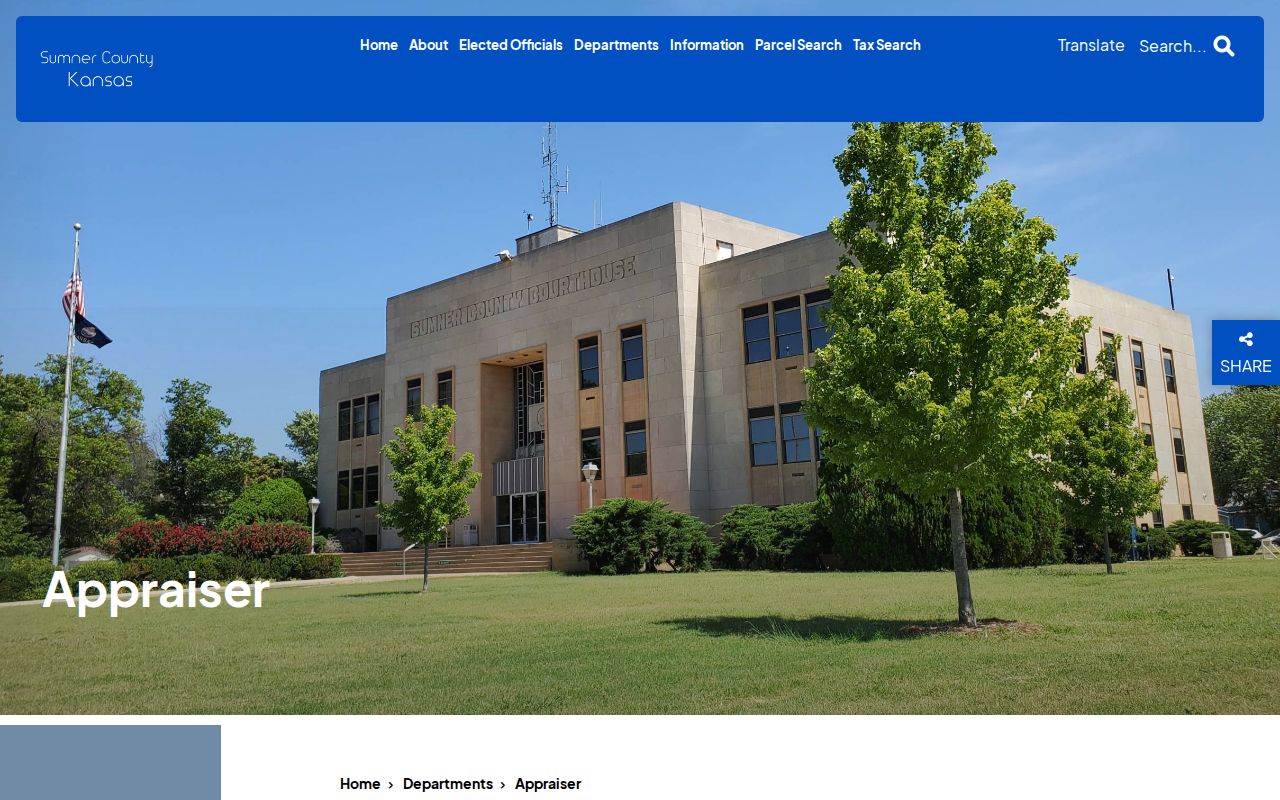
Use its parcel link for the roll name; the deed confirms the transfer.
Confirm the instrument. A newest recorded full-interest deed is better evidence than an older roll name, though a simple lookup is not a title examination.
Trust Owners Need Deed Context
Trustees, estate representatives, and companies often hold Sumner County land. Search the recorded wording exactly. Then test initials, suffixes, punctuation, and earlier names. Same-name people come apart only through legal description, tax ID, city, and recording date.
One Kansas Geological Survey deed names two trustees of a family trust as grantees. The recording sits at Book 0870, Page 0059. That instrument conveys a mineral interest in a quarter-section, though, not necessarily the surface. Instrument type changes the answer. Mortgages, releases, easements, and limited-interest deeds can name parties. But that does not make any of them owner of the whole parcel.
- Owner of record
- The name carried on an official roll at a stated time.
- Grantee
- The party receiving the interest described in a deed.
- Situs
- The property's physical address, distinct from a tax-mail address.
- Title
- The legal rights and interests in land, which one database cannot fully establish.
Mulvane Searches Cross County Lines
Mulvane sits in both Sumner and Sedgwick counties. A Mulvane mailing address proves nothing about which courthouse holds the record. Confirm the county before you search. City planning documents can explain zoning or annexation, but each county's deed and assessment offices keep their own land trail.
Postal geography is not jurisdiction. Near annexed or extraterritorial edges, a city address, county tax record, utility service, and zoning label can shift at different times. Match the legal description and county first. Then follow that county's roll-to-deed route.
When an address search fails, use the portal's separate address components instead of guessing a new owner. The Sumner tax form provides Address Number, Prefix Direction, Direction, Street, and ZIP fields in that order. Keep the order intact. Rural tracts need the Mapping or Appraiser office to link section-township-range language to a tax ID. A ZIP can cross a municipal line. Treat it as a mailing clue only.
Estate Records Can Bridge Owners
A deceased owner's name can linger in one record. An estate instrument can explain the next step. Look for an executor or administrator deed. A transfer-on-death instrument, affidavit, or probate order tied to the same legal description can bridge the gap. Sumner County District Court holds estate context, and the Register holds the recorded land instrument.
Death certificates are restricted Kansas vital records. They are not a public owner-search shortcut, and direct-interest eligibility applies. Use them only for genuine estate transitions. Then return to the deed to see what interest was actually recorded.
Limits of Sumner Owner Records
A roll name proves no residence. Nor any right to sell or clear title. Maps locate tax tracts but survey no boundaries. Trusts, companies, reserved minerals, probate transfers, and unrecorded interests all narrow what an owner name means. Kansas K.S.A. 45-230 also restricts certain uses of public name and address lists, so review the portal certification before repeated searches.
Lawful use. Sumner County owner records support property diligence, estate work, and respectful contact. Never use them to stalk, intimidate, or harm anyone.