
Three Sumner Property Values
The same parcel may carry several legitimate numbers. Each comes from a different legal or administrative task, so labels and dates matter more than a quick comparison.
| Value type | Meaning in the record | Primary source |
|---|---|---|
| Appraised value | The county's fair-market-value estimate for assessment work | Sumner County Appraiser parcel record |
| Assessed value | Appraised value multiplied by the Kansas statutory class rate | Appraiser roll |
| Last sale price | A past transaction amount, when shown and validated | Recorded deed or sales-validation record |
A recorded sale may be old, unusual, or partial, and it may even occur between related parties. The assessed value exists for taxation, while the appraised figure comes from mass appraisal. Never substitute one for another without noticing the difference.
Find a Sumner Assessed Value
Start with the county parcel search using an address, an owner of record clue, or a tax ID. Confirm the legal description before reading any amount. That step matters most where mailing and site addresses differ.
- Open the Sumner County Parcel Search.
- Locate the parcel and preserve its exact identifier.
- Read the appraised and assessed figures with the valuation year.
- Confirm classification and actual use.
- Check a recorded sale separately if price context is needed.
The county's parcel search entry screen is where a lookup begins. Fields on the results page appear after logging in, so plan to explore them there rather than guessing at the layout beforehand.
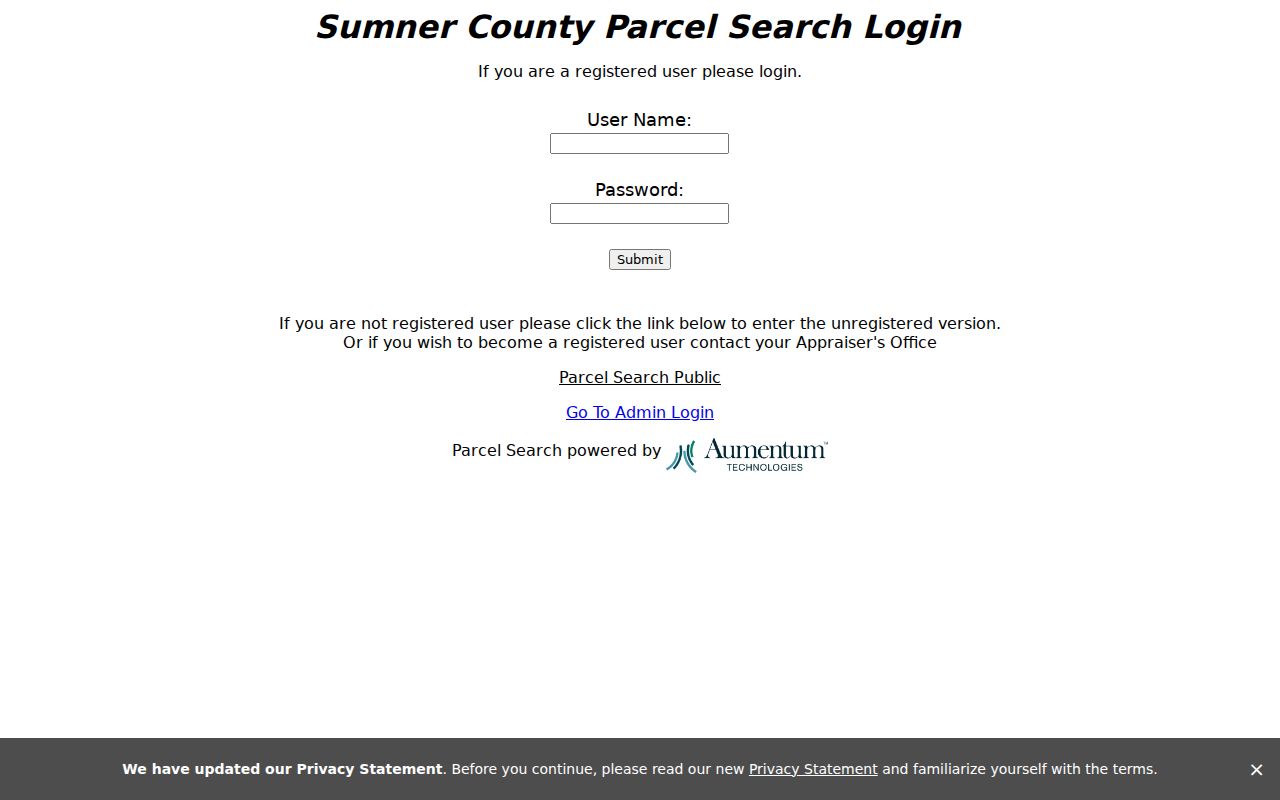
Field availability varies by parcel. Check the live result card for yourself instead of assuming which valuation details the county displays for a given property.
Kansas Property Value Terms
The Kansas value system uses related terms with precise roles.
Appraised value is the county's estimate of fair market value for a parcel. Assessed value is what remains after the statutory class percentage is applied. That percentage comes off the appraised amount. Assessment ratio names the class percentage itself. Sale consideration is the amount tied to a transaction, whenever the deed record discloses it. Reassessment is the recurring process of setting a new roll value across the county.
Appraisal level and assessment ratio are not the same thing. The first measures how closely appraised values track real sale evidence. The second is simply a percentage set by property class.
Residential Value at 11.5 Percent
Kansas assesses residential property at 11.5 percent of appraised value. Vacant lots use 12 percent. Commercial and industrial property carries 25 percent, agricultural improvements carry 25 percent, and agricultural land is assessed at 30 percent of use value. Mixed-use parcels can be split among classes. For illustration, the state starts with a $200,000 residential appraised value. Applying 11.5 percent yields a $23,000 assessed value. A further 130-mill calculation produces $2,990 in taxes. That mill levy is only a Kansas teaching example, not a stated Sumner County levy.
How Sumner Appraises Property
The Sumner County Appraiser defines fair market value as the price informed buyers and sellers might reach. It applies in an open, competitive market without undue compulsion. The office may apply cost, sales-comparison, and income approaches. Residential work leans on cost and sales evidence. Income matters more for commercial property. One recent sale does not mechanically set every nearby Sumner County property value. That is the reason. Condition, use, physical traits, and location all differ. The evidence available for a given valuation date differs too. State ratio studies test appraisal performance overall. A statewide or county ratio does not establish a trend for your neighborhood. Read the county's own explanation at the Why Appraisal page.
The source distinguishes an appraisal method from the tax step that follows it.
Sumner Value Dates Matter
Sumner County sets January 1 as the valuation date. Real-property notices go out by March 1. The appeal deadline for real property is March 30. The Appraiser certifies the roll by June 15. This calendar explains why a current market event may not appear in the record you open today. Save the tax year and valuation date beside every amount you record. Annual ownership maps can follow a different update cycle. Comparing two parcels without aligning years can make a normal timing difference look like a valuation error.
Sale Price Is Separate Evidence
A recorded sale price describes a transaction, not the county's current estimate. Turn to the deed and any sales-validation material. Look there for the date, parties, interest conveyed, and consideration clues. Then check whether the transfer covered the whole surface estate or only a limited interest. Sumner County publishes a sales-validation questionnaire form. Do not infer a value when the public document shows none. The Register of Deeds holds the recorded instrument. The office publishes no public online grantor-grantee index or image portal. Counter, mail, phone, or written requests remain part of the access chain for deed records.
Use and Class Change Values
Classification keys off actual use on January 1. So a parcel the zoning records call commercial may still sit in a different class on the tax roll. A mixed-use tract can carry several class allocations at once. Agricultural land adds another wrinkle: it is valued by use value. That makes stacking it against a residential lot a false comparison from the start.
Write down the class, the valuation year, and any change in use. Note the split between land and improvements where shown. Those fields tell you far more than a bare assessed total ever will. Exemptions can move the taxable amount. But the tax bill and the appeal process follow the Sumner County property tax records path.
Sumner Property Value Limits
An assessor figure comes from mass appraisal built for public administration. It cannot weigh every fact a buyer, seller, or private appraiser might consider. No single date drives it. A sale amount stays historical. An assessed value remains a statutory fraction used only for taxation.
Value is not price. A Sumner County assessed value is not what a property will sell for, and it is not a private appraisal.
Property records are a starting point, not a verdict on value. Before any purchase, pair Sumner County records with a fresh inspection, title work, and a professional appraisal, and keep each figure tied to its source and date.